
NHRA Legends of Drag Racing
Concrete Software, Inc.Racing
4.4271.00 Reviews
- Version
- 1.14.0
- Installs
- 50.00K
- Age Rating
- Everyone
Screenshots
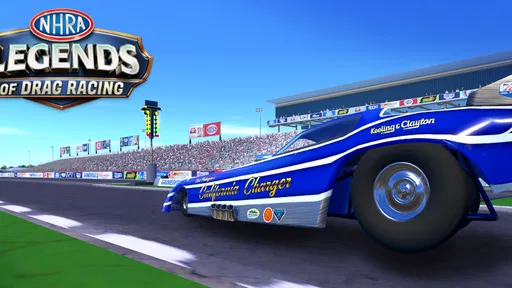
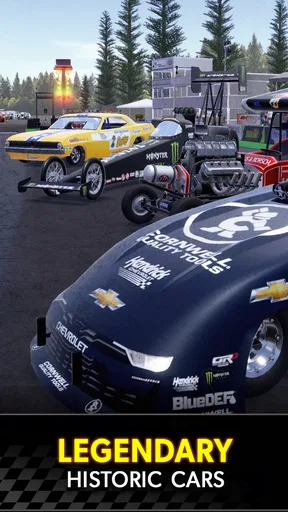
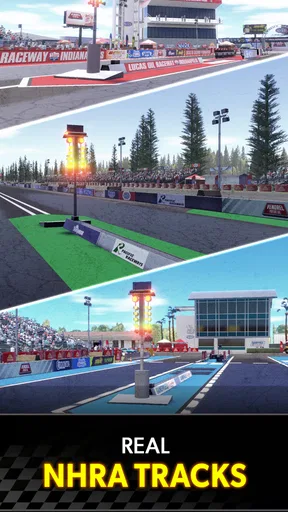
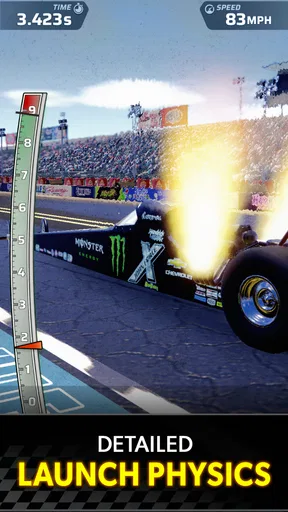
Our Review of NHRA Legends of Drag Racing
 Analysis by Appyee
I spent time with NHRA Legends of Drag Racing as a focused mobile racing game rather than treating it like a broad collection of driving activities. That distinction matters. This is a drag-racing experience from Concrete Software, Inc., built around the short, intense rhythm of lining up, launching, and trying to make a clean run. It is free to install, carries an Everyone age rating, and is listed for devices running Android 8.0 or later. The current version is 1.14.0.
My first impression was that the game is easiest to understand when you already like the idea of NHRA-style straight-line competition. It does not ask you to learn a large open world or memorize a complicated map. The appeal is concentrated in the race itself: preparation, timing, acceleration, and the small decisions that separate a satisfying pass from a disappointing one. That narrow focus gives it a clear identity, although it also means people looking for varied circuits or relaxed cruising may find the experience less flexible.
How NHRA Legends of Drag Racing handles readability and navigation
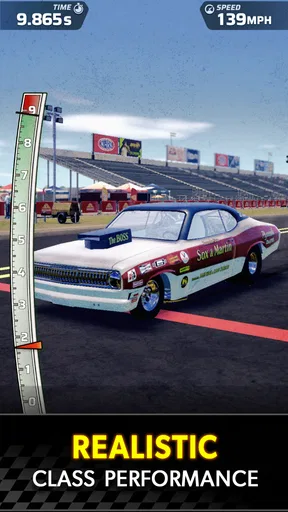
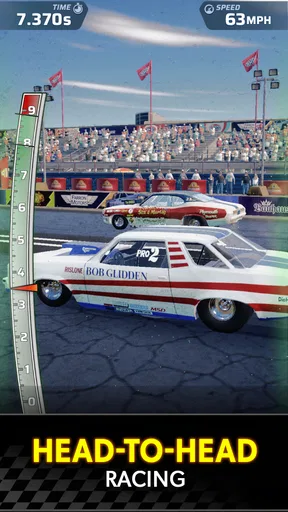
The most accessible part of the design is its simple mental model. A drag race happens on a straight strip, so I never had to divide my attention between steering through corners, watching traffic, and searching for the next checkpoint. For players who find conventional racing games visually busy, that reduction can make the action feel more manageable. The important question is usually what is happening at the start and during the run, not where the track turns next.
That simplicity does not make every moment equally easy to follow. Drag racing is fast, and the useful information appears during a brief window. If you have difficulty reading small interface elements, distinguishing indicators, or processing several visual cues at once, the launch sequence may require more concentration than the short race length suggests. I found that the game rewards learning the visual rhythm rather than trying to inspect everything while moving.
My practical advice is to begin with a few unhurried attempts instead of immediately treating every run as a test of skill. Watch where the launch information appears, notice which parts of the screen demand attention, and establish a consistent grip on the phone before chasing better results. That approach is particularly helpful for anyone who uses a larger text setting at system level or prefers a less cluttered visual field, because it reduces the need to search around during the critical seconds.
Navigation also benefits from the game’s specialized subject. Someone who understands drag racing will probably recognize the purpose of the main choices quickly, while a newcomer may need a little trial and error. The game is not a general driving tutorial in disguise. I would not recommend assuming that familiarity with arcade racers automatically prepares you for its timing. The straight track removes steering complexity, but it replaces that complexity with precision.
One useful habit is to separate menu decisions from racing decisions. Before starting a serious attempt, I take a moment to confirm what I am selecting and avoid making changes while impatiently tapping through screens. This is a small workflow, but it helps players who need extra time to read or who use one hand. It also prevents a common mobile-game frustration: entering a run before you are physically ready to concentrate.
The game’s audience numbers suggest that it has found a modest but established group of players, with an average rating of 4.4 from around 594 ratings and over 271 written reviews. I treat that reception as encouraging rather than definitive. A drag-racing game can suit one player perfectly and still feel too specialized for another, so the rating should not replace your own expectations about pace, controls, and visual focus.
Motor demands are concentrated rather than spread across a full circuit
From a motor perspective, the game’s biggest advantage is the absence of ordinary track steering. You are not constantly turning the phone, dragging around hairpins, or correcting a car through a crowded course. That can make it a better fit for someone who finds sustained steering uncomfortable or who prefers short, repeatable interactions. A run is a compact task, which makes it easier to pause between attempts and reset your hand position.
At the same time, reduced steering does not mean reduced motor demand. The race depends on accurate timing and quick input, so a player with limited dexterity, tremor, slower reaction speed, or fatigue may find the launch sequence demanding. The challenge is not endurance over a long lap; it is the need to perform a precise action at the right moment. That difference is important when deciding whether the game’s format will actually feel comfortable.
I found the most useful adjustment was pacing. Rather than repeating attempts without a break, I treated each run as a separate exercise: prepare the phone, focus on the start, complete the pass, then stop for a moment. This makes the game more practical for short sessions and reduces the chance that frustration turns into hurried taps. It also gives players with variable energy a natural way to play without committing to a long event.
One trade-off is that the concentrated control scheme may be less forgiving than a slower racing game with broad steering assistance. In a conventional circuit racer, you can sometimes recover from a mediocre corner by driving well afterward. In drag racing, an early mistake can define the whole attempt. That can feel fair to competitive players, but it may be discouraging for anyone who needs a gentler learning curve or more time to correct an input.
I would also consider the physical setup. Playing while walking, riding in a vehicle, or holding the phone at an awkward angle is a poor match for a timing-based race. The game is more comfortable when the device is stable and your thumb or finger has a predictable starting position. A small stand or a firm two-handed grip may help some players, although people with one-handed use should first check whether the controls feel reachable without stretching.
Sensory load, sound, and concentration during a run
Drag racing naturally creates a sharp sensory profile: a quiet preparation period followed by a rapid burst of movement and feedback. Players who enjoy strong audiovisual reactions may find that satisfying. For players sensitive to sudden sound, vibration, flashing effects, or rapid motion, the same structure can be tiring. I would test the game in a calm environment and adjust the phone’s sound and vibration settings before deciding whether longer sessions are comfortable.
Because the race is short, sensory fatigue may be easier to manage than in an extended circuit event, but intensity still matters. A quick game is not automatically a low-stimulation game. If you are prone to motion discomfort, keep the device steady and begin with brief sessions. If you use headphones, a moderate volume is sensible because the important information should not require uncomfortable loudness.
The visual focus can also be demanding for players with color-vision differences or difficulty distinguishing fast-changing indicators. I would not rely on color alone when learning the timing. Instead, pay attention to position, sequence, and the overall change in the interface. This is a general playing strategy rather than a claim that the game offers specialized accessibility modes. The practical point is to build recognition from more than one visual clue whenever possible.
For players who are deaf or hard of hearing, the game may be more approachable if the critical information can be understood visually, but I would still judge that through actual play rather than assuming every sound cue has an equivalent on-screen signal. Similarly, blind or low-vision players should not expect a fully audio-led experience simply because the races are straightforward. The game’s core presentation is visual, and that can be a decisive limitation.
Why the game works in some everyday situations and fails in others
My favorite use case is a short break when I want a focused activity rather than a long story or a full racing championship. A player waiting for an appointment, taking a quiet break at home, or winding down after work can complete a few attempts without needing to remember a large world. The format is also suitable for someone who enjoys improving one narrow skill through repetition. You can concentrate on making the start cleaner instead of learning dozens of unrelated systems.
That same focus makes it unsuitable for every context. I would not play while commuting on foot, waiting in a crowded queue where the phone is constantly moving, or sitting somewhere that requires frequent attention to other people. The short race may look convenient, but the timing still asks for concentration at the exact moment distractions are most likely to occur. It is better as a deliberate break than as a game to operate absent-mindedly in the background.
For families, the Everyone rating makes the game easier to consider in a shared household, but age suitability and control suitability are different questions. A younger player may understand the racing theme while still finding the timing difficult. An older player may enjoy the cars and competition but prefer shorter sessions because of visual or hand fatigue. I would introduce it by letting the player explore at their own pace, not by turning the first attempt into a performance test.
The game is also a reasonable choice for fans who want a more specific alternative to broad arcade racers. A typical circuit racer emphasizes cornering, braking, route knowledge, and recovery. NHRA Legends of Drag Racing puts more weight on the launch and the run itself. If you like the satisfaction of refining one repeatable sequence, that specialization is a strength. If you need changing scenery, exploration, or frequent tactical variety, a circuit-based game will probably offer more.
Compared with a simulation-heavy racing title, this game may feel easier to approach because the core activity is clearly bounded. However, a bounded activity can become repetitive sooner if you do not enjoy the subject. Compared with a casual endless runner, it asks for more deliberate timing and less continuous swiping. Compared with a management game, it gives you more immediate control and less emphasis on planning outside the race. Those differences are more useful than simply calling it “fast,” because they explain what kind of attention it expects.
Progress, spending, and the practical limits of the free model
The game is free, which makes it easy to try without an upfront purchase. It includes optional in-app purchases ranging from $0.99 to $99.99 per item. That wide range is worth keeping in mind before spending, especially if you are reviewing the game for a child or sharing a device. I recommend deciding in advance whether you are only sampling the free experience or whether you are comfortable paying for faster progress or additional conveniences if they appear during play.
For me, the best way to evaluate a free racing game is to ask whether the basic loop is enjoyable before considering extras. Here, that means finding out whether preparing for a run, launching consistently, and repeating the challenge remains interesting on its own. If the answer is no, purchases will not solve the underlying mismatch. If the answer is yes, you can treat spending as optional rather than as an entry requirement.
Another practical point is device age. The minimum operating system is Android 8.0, so anyone using an older Android phone should check compatibility before planning around the game. On a supported device, I would still close unnecessary apps and play with a stable connection if the game’s own behavior makes that useful, but I would not assume that a newer phone automatically improves personal accessibility. Screen size, grip, brightness, and responsiveness can matter as much as raw hardware.
The current version, 1.14.0, is a helpful detail for troubleshooting because it gives players and support staff a common reference point. If the game behaves differently after an update, note the version shown on your device before changing several settings at once. That simple habit makes it easier to identify whether a problem is related to the phone, the controls, or the game build.
Barriers I would want players to consider before downloading
The main barrier is not the number of menus or the size of the track. It is the demand for precise attention in a short window. Players with slower reactions may feel that the game judges them before they have time to settle. Players with hand pain may appreciate the short races but dislike repeating the same high-focus input. Players with visual processing difficulties may need more time to learn which cues matter, and the speed of the presentation can make that learning tiring.
There is also a social barrier for people who do not already care about NHRA or drag racing. The official-racing identity gives the game a clear personality, but it does not automatically make the format interesting to someone who prefers rally courses, drifting, open-world driving, or vehicle customization as the main attraction. I would skip it if your ideal racing game is about exploring a landscape or recovering from complicated corners.
Screen access can be another issue. A small phone may make the interface harder to inspect and the controls less comfortable, while a very large phone may be awkward for one-handed play. Bright outdoor light can reduce readability, and glare can turn a quick visual check into a guess. These are ordinary mobile limitations, but they matter more when a fraction of a second affects the result.
Finally, the free-to-play structure deserves calm attention. Optional purchases are not automatically a problem, but the presence of items up to $99.99 means account and device safeguards are sensible. I would use purchase authentication on a shared phone and explain to younger players that free installation does not mean every later option is free. That is good practice here because the game’s competitive loop can encourage “one more attempt” thinking.
My inclusive verdict on this specialized racer
I recommend NHRA Legends of Drag Racing to players who want a compact, focused drag-racing game and who are comfortable with quick visual timing. Its straight-line structure can be more approachable than a full circuit racer for people who dislike steering complexity, and its short attempts suit breaks, limited energy, and repeat practice. The game also gives fans of NHRA-style racing a more specific experience than a generic driving title.
I would be more cautious for anyone who needs slow controls, strong text enlargement, audio-first navigation, or extensive alternative input options. I would also steer away from it if you want a relaxed game that can be played while distracted. The game’s accessibility strengths come mainly from its narrow format, not from a broad collection of confirmed accommodation tools. That distinction keeps my recommendation honest.
Concrete Software, Inc. has chosen a clear lane: quick runs, concentrated timing, and the atmosphere of official drag racing. With over 50K installs, it is not an obscure experiment, but its audience remains naturally more specialized than that of a general racing game. My final advice is to try it during a quiet moment, with the phone stable and purchases protected. If the launch rhythm feels satisfying after several attempts, the focused design may keep you coming back. If that rhythm feels stressful or visually demanding, a slower circuit racer with more forgiving controls will be the better fit.
Verdict
Strengths of NHRA Legends of Drag Racing
- Authentic NHRA cars, tracks, and drivers create a convincing drag-racing atmosphere.
- Short races make it easy to enjoy quick sessions whenever you have a few minutes.
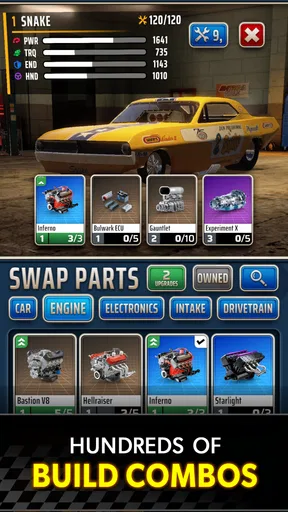
- Vehicle upgrades provide clear goals and make progression feel rewarding.
- Simple controls are approachable for newcomers while still allowing tuning choices.
- Offline play lets you race without relying on a constant internet connection.
Limitations of NHRA Legends of Drag Racing
- Some progression can feel slow unless you invest considerable time in upgrades.
- Race outcomes may depend heavily on vehicle stats rather than driving skill.
- The interface feels dated compared with newer mobile racing games.
- Limited event variety can make the experience repetitive after extended play.
- Ads and optional purchases may interrupt the flow for some players.
Other Releases by Concrete Software, Inc.
View All
PBA® Bowling Challenge
Sports4.4

PGA TOUR Golf Shootout
Sports4.4
Similar Picks in This Category
View All
Hill Climb Racing
Fingersoft4.3

Dr. Driving
SUD Inc.4.2

Traffic Rider
skgames4.5

Asphalt 8 - Car Racing Game
Gameloft SE4.6

Race Master 3D: Car Racing
Beresnev Games4.6

Extreme Car Driving Simulator
AxesInMotion Racing4.3
Frequently Asked Questions
What is NHRA Legends of Drag Racing?
NHRA Legends of Drag Racing is a racing game focused on the excitement and history of National Hot Rod Association-style drag racing. Players can build, customize, and race powerful drag cars in short, intense events. The experience is centered on straight-line acceleration, timing, tuning, and progression rather than traditional circuit racing with corners.
How does the gameplay work in NHRA Legends of Drag Racing?
The game focuses on launching your car effectively, shifting at the right moment, managing acceleration, and improving performance through upgrades. Races are usually quick, but winning consistently requires more than simply pressing the accelerator. Vehicle setup, reaction time, tuning choices, and understanding your car’s power delivery can all affect the result, especially as opponents become more competitive.
Can I customize and upgrade cars in NHRA Legends of Drag Racing?
Yes, customization and performance progression are important parts of the experience. Depending on the available content and game mode, you can improve areas such as engine power, acceleration, traction, and overall race performance. Upgrades help your vehicle remain competitive, while visual customization can make your car feel more personal. Players should expect progression to require time, in-game currency, or both.
Does NHRA Legends of Drag Racing require an internet connection?
An internet connection may be needed for certain features, including downloading game data, accessing online events, synchronizing progress, receiving updates, or using advertisements and in-app purchase services. Some basic gameplay may work offline, but availability can depend on the version installed and the device platform. It is best to check the game’s current store description before relying on offline access.
Is NHRA Legends of Drag Racing free to download and suitable for all players?
The game may be available as a free download, but it can include optional in-app purchases, advertising, or progression systems designed to encourage additional spending. It is most suitable for players who enjoy drag racing, car upgrades, and short competitive events. Before downloading, parents should review age ratings and purchase settings, while all users should confirm device compatibility and storage requirements.
Play our best games!


